
Andhra Pradesh Chief Minister N Chandrababu Naidu met CEOs of several global companies and participated in "India Networking" session at the World Economic Forum meeting in Davos

'While my generation carries with it the memory of the Chinese perfidy of 1962, this generation will carry the memory of Chinese perfidy in Galwan.'
Musharraf said he was confident that bilateral talks would gain momentum after the February 18 general elections in Pakistan.
In the ongoing World Economic Forum, Kamal Nath asserted that US recession will not slow down India's economic growth.
FM will participate in WEF meet at Davos. Global equity woes likely to dominate talks at the meet.
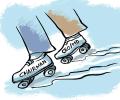
Most Indian chief executives are optimistic about the economy and believe it would improve in the coming 12 months, said a survey by consulting and auditing firm PwC on Tuesday. The company's 27th annual global survey polled 4,702 chief executive officers (CEOs) in 105 countries and territories, including 79 in India, from October 2 to November 10, 2023. As many as 86 per cent of CEOs in India - 30 per cent higher than a year ago - are confident that the economy would improve.

The annual Edelman Trust Barometer report, released every year during the World Economic Forum's Davos summit, also showed that business has replaced government as the most trusted and is now followed by government and media in that order.
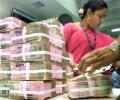
This failure of basic short-term policy is surprising, given the star power that this government brings to its economic management.
Under attack from the international community for not reining in terrorist outfits, Pakistan on Thursday said that it will not allow use of its territory for terror activities."I assure you and I assure the House that I will never ever allow my soil, Pakistani soil to be used for terror activities," Pakistan Prime Minister Yousuf Raza Gilani said at the World Economic Forum in Davos.Terming the Mumbai incident as 'unfortunate', Gilani said, "We condemn terrorism."
Social entrepreneurship is a marriage between effective business techniques and social good. It is something that Mahatma Gandhi pioneered, Uday Khemka tells Business Standard.

Minister for Communications, IT and Divestment Arun Shourie would lead a delegation to the World Economic Forum to be held in Davos (Switzerland) during January 20-25.
44% citizens of the world agree that the eradication of poverty and hunger is the most important priority for the world, says the Voice of the People survey, carried out for the WEF, by Gallup.
The 56 Indian businesses surveyed in 2004-05 expressed some concern over the impact of HIV/AIDS. Of these, 46 per cent report some current effect of the virus on their company, with 14 per cent reporting 'serious effects.'
The Dubai Model is now revealed to be a mirage and one hopes that India's leaders would have drawn the appropriate lessons from it, says Mohan Guruswamy.

"We plan to hire 2,000 people in the next four-five months or by the end of this fiscal. Currently we are 16,000 people in India."
Indian companies Reliance and Infosys, both active players in the Chinese market, are among the global industry majors who have partnered with the World Economic Forum to organise the 'China Business Summit 2005' in Beijing.
Apparel company Murjani Group is leading the charge, bringing Western labels such as Tommy Hilfiger and Calvin Klein to Indian shoppers.

The IMF lowered India's economic growth estimate for the current fiscal to 4.8 per cent and listed the country's much lower-than-expected GDP numbers as the single biggest drag on its global growth forecast for two years.
Citigroup Inc, the largest US bank, has asked India to liberalise its financial services sector, saying it would help the country maintain and improve over eight per cent GDP growth.
There is a significant shift happening towards emerging economies as they start to integrate more rapidly into the global trading system
Singapore is the world's most successful economy in exploiting ICT developments; US fifth, China 41st.
The 'R' word is everywhere. It's being discussed at World Economic Forum at Davos and now we have clients calling in at Orpheus, asking us about "recession" and how bad it is. And, is there a chance that the global depression might be starting? Such worries, though, important and critical, do highlight the mass psychology and how it reads the Federal interest rate cut and subprime crisis as a start of something bigger and problematic.
"The recent talk about a new cold war is hyperbolic nonsense. Our relations today are fundamentally different (with Russia) than they were when all we shared was the desire to avoid mutual annihilation," she said, speaking at the World Economic Forum in Davos on Wednesday.
While the national population explosion places nearly intolerable strains on India's physical and social infrastructure, the country's democracy is so dysfunctional that it is reasonable to ask whether it can rise to the looming economic and demographic challenges.
The issue at hand is not ASEAN versus Chindia, but ASEAN plus Chindia. Given the strengths of ASEAN and the growing muscle of India and China, the scope for constructive cooperation is immense, he said.
"The notion that companies in Asia are winning market share only on cost is obsolete," said meeting co-chair Nandan M Nilekani, president, chief executive officer and managing director, Infosys Technologies, India.
